
Church HistoryPublished recommendation
A Short History of the Catholic Church
A concise survey of Catholic history. It offers orientation before a reader turns to longer studies of individual periods and controversies.

Jimmy Akin is a Catholic Answers apologist and author who explains Scripture, Church teaching and questions about the faith.
His recommended reading offers practical help for understanding Catholic beliefs and exploring their foundations.
40 verified · 0 secondary evidence · 2 unverified
Original reading page checked; unresolved collection scopes remain labeled.
A concise survey of Catholic history. It offers orientation before a reader turns to longer studies of individual periods and controversies.

Eleven conversion accounts examine the biblical and historical questions that led their authors toward Catholicism. The varied stories can help readers identify questions to explore more deeply.

Chesterton reflects on conversion and the intellectual obstacles surrounding the Catholic Church. Its essays combine personal conviction with his characteristic reversals of familiar assumptions.

Kippley develops an account of sexual morality centered on the marriage covenant, presenting an argument within Catholic moral thought.

Robillard examines claims about reincarnation, inviting readers to consider the arguments behind a belief distinct from Christian resurrection.

A defense of Marian doctrines responds to objections, offering readers an apologetic treatment of Catholic teaching about Mary.

Alcorn presents pro-life responses to arguments for abortion, offering a work of advocacy organized around disputed questions.

Contributors explore John Paul II’s call for a new evangelization, considering how the Christian message is communicated and lived.

Pacwa examines New Age ideas from a Catholic perspective, helping readers compare their religious claims with Catholic teaching.

An edited collection of Catholic apologetic essays. Useful for comparing several writers’ approaches to explaining and defending the faith.

A systematic argument for Catholic belief, written in the tradition of philosophical apologetics. Its sequence of arguments suits readers willing to work through definitions and premises carefully.

An introduction to the relationship between reason and Catholic faith. It offers a starting point for readers who want to examine the grounds of belief.

William Most addresses objections to Catholic belief and the questions raised by modern criticism. Read it alongside the sources and arguments it discusses.

A structured philosophical defense of Catholic belief. Its textbook approach rewards attention to the distinctions on which each argument depends.
A collection of Church teaching in English translation. It serves as a reference for studying doctrine through the documents themselves.
A compendium of doctrinal documents arranged for study. Consult it to trace how the Church has expressed a teaching across different councils and periods.

A collection of conciliar and papal texts gives direct access to doctrinal statements from Trent, Vatican I, and related documents.

The documents of Vatican II and associated texts provide a primary source for studying the council’s teaching and reform.

A reference companion gathering texts cited by the Catechism. It helps readers move from a concise statement of doctrine to the sources behind it.

Ratzinger and Schönborn introduce the Catechism’s purpose and character, offering orientation before readers enter its larger presentation of the faith.

An early account of the Church’s development, preserving evidence about Christian communities, teachers, controversies and persecution. A modern annotated translation helps place its claims in historical context.

Early Christian texts gathered under the name Apostolic Fathers reveal the teaching, worship, and concerns of communities near the apostolic age.

Rice introduces natural law through questions and answers, connecting moral reasoning with debates about how people should live together.

A sweeping account of humanity and Christianity that asks what makes the human person—and the person of Christ—different.

The third volume of Warren Carroll’s history follows Christendom from 1100 to 1517. It connects major religious events with the political and cultural struggles of the period.

The second volume of Warren Carroll’s history covers 324–1100. It follows Christian civilization through imperial change and the formation of medieval Europe.

The first volume of Carroll’s history begins his account of the formation of Christendom, establishing the setting for the larger series.

A systematic reference to Catholic doctrine, connecting theological claims with Scripture and tradition. Best suited to readers seeking precise explanations and deeper study.

Scott and Kimberly Hahn tell the story of their journey into the Catholic Church, including its theological questions and effects on their marriage.

Essays introduce central Christian beliefs and the questions they raise. Kreeft’s conversational approach invites readers to examine both arguments and their implications for life.
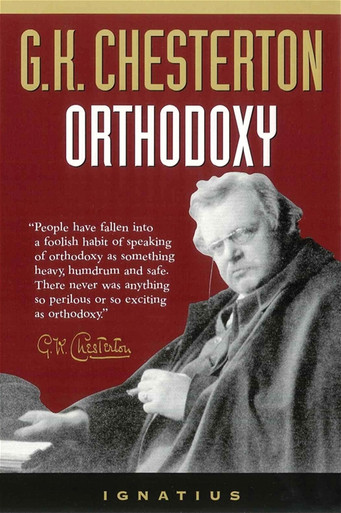
Chesterton retraces his discovery of Christian belief through wonder, paradox and common sense. Read it as an intellectual adventure rather than a systematic catechism.

Shea recounts an evangelical Christian’s examination of the Real Presence, bringing personal inquiry into conversation with Eucharistic belief.

A concise introduction to major Catholic doctrines, written to help ordinary readers understand what they profess in the Creed.

Sheed connects Catholic doctrine with a coherent understanding of reality. An ambitious introduction to thinking clearly about God and the human person.

Brief responses to common misunderstandings about Catholic belief. A useful entry point for readers who want clear questions to guide further study.

Keating answers objections to Catholicism associated with Protestant fundamentalism. Scripture, Church history and the differences between the two approaches to authority shape the discussion.

The third volume of Jurgens’s selection of early Christian texts in translation. Use the collection’s doctrinal index and historical notes to place individual passages in context.

The second volume of Jurgens’s selection of early Christian texts in translation. It offers primary-source passages for studying the development and expression of Christian teaching.

The first volume of Jurgens’s selection of early Christian texts in translation. A reference for encountering early witnesses to Christian worship, belief and communal life.
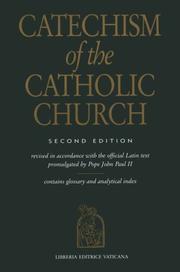
The Church’s systematic exposition of faith, sacraments, moral life and prayer. A reference to return to alongside other reading.
A systematic guide to arguments about God, Christianity and common objections to belief. It addresses broadly Christian claims; the later Catholic adaptation is a separate work.
Essays examine the reasoning behind Humanae Vitae and its teaching on marriage and contraception. This original collection is distinct from the later sequel, Why Humanae Vitae Is Still Right.