
PhilosophyPublished recommendation
Philosophical Investigations
Wittgenstein investigates how language works in ordinary life, challenging assumptions about meaning, thought, and philosophical problems.

Bishop Robert Barron is the founder of Word on Fire, a Catholic ministry connecting faith with culture.
His reading list invites readers into theology, philosophy, literature and the intellectual life of the Church.
69 verified · 0 secondary evidence · 11 unverified
Original PDF checked; some collected works and edition scopes remain unresolved.
Wittgenstein investigates how language works in ordinary life, challenging assumptions about meaning, thought, and philosophical problems.

Sokolowski examines how the Christian understanding of God relates to reason, opening foundational questions for theology.

Polkinghorne brings scientific inquiry and religious belief into conversation, asking how each contributes to human understanding.

Placher argues that modern thought has made God too manageable, inviting readers to reconsider divine transcendence.

Placher considers how a distinctly Christian theological voice can take part in conversation within a religiously diverse world.

Nussbaum examines emotions as forms of thought and evaluation, asking what they reveal about what people value.

Neiman traces philosophical reflection on evil through modern thought, using the problem of suffering as a guide to intellectual history.

The first volume of McClendon’s systematic theology approaches Christian thought through ethics and the shape of lived belief.

Marion questions whether the language of being adequately names God, offering a demanding encounter between philosophy and theology.

Kerr examines different interpretations of Aquinas, helping readers see why Thomism contains continuing debates rather than a single uniform approach.

Joyce follows a young man’s artistic and intellectual formation amid family, religion, and national identity in Ireland.

Hadot explores ancient philosophy as a practice of living, inviting readers to consider philosophical study as personal formation.

Eco surveys medieval thinking about art and beauty, offering context for the visual and intellectual culture of the period.

A murder mystery in a medieval monastery becomes an intricate novel about books, interpretation, authority, and the search for truth.

Dupré examines the transition to modernity through changing understandings of nature and culture, offering an interpretive intellectual history.

Duffy examines English religious life before and during the Reformation, bringing close historical attention to worship and popular devotion.

Burrell studies Aquinas on God and action, inviting careful reflection on the language and concepts used in theology.

Barnhart offers a theological reading of John’s Gospel, encouraging readers to consider the text as a connected spiritual whole.

O’Connor’s letters reveal her humor, literary judgment, and religious convictions, offering personal context for her demanding fiction.

McCabe’s theological writing returns to questions about God and Christian belief, combining intellectual inquiry with direct engagement.

Wright introduces Christianity through human longings and the biblical story, writing for readers exploring why Christian belief might make sense.
Newman addresses the position of Catholics in England, engaging the public arguments and prejudices of his setting.
Möhler compares Catholic and Protestant teaching through their confessional traditions, offering a historical work of comparative theology.
Pascal’s unfinished reflections probe greatness and misery, reason and belief. Its fragmentary form rewards returning to individual passages.

Aquinas develops an extended account of truths about God and creation, using philosophical argument alongside discussion of revealed teaching.

Origen answers the critic Celsus, preserving a substantial early debate between Christianity and an educated pagan opponent.

Short theological reflections explore the tensions and surprises of Christian faith, inviting readers to pause over compact ideas.

Balthasar reflects on Christian prayer as attention to God, offering a theological companion to the practice of contemplation.

Tugwell explores Christian spirituality through its history, drawing attention to the imperfect people and practices through which it develops.

Selected sermons and other writings introduce Eckhart’s mystical thought, offering a challenging encounter with medieval spiritual language.

Origen interprets the Song of Songs spiritually, reading its language of love as material for Christian contemplation.

A searching autobiography addressed to God: Augustine follows desire, ambition and grace from his youth through conversion. Later books turn to memory, time and creation.

Brown closely examines the Gospel accounts of Jesus’ Passion, providing an extensive scholarly companion from Gethsemane to burial.

Sanders studies Jesus within the Judaism of his time, offering a historical approach to questions about his life and mission.

Dunn presents a sustained account of Paul’s theology, providing a scholarly guide to the apostle’s major concerns.

Brueggemann explores Old Testament theology through the language of testimony and dispute, attending to the variety of biblical voices.

Alison reconsiders original sin in light of the Resurrection, presenting a theological argument about human understanding and transformation.

Wright examines Jesus’ activity and message within their first-century setting, developing a historical argument about his aims and identity.

Wright studies resurrection belief in its ancient setting and argues for the significance of the earliest Christian claims about Jesus.

Bernard’s treatment of the Song of Songs turns biblical love poetry into sustained reflection on the soul’s relationship with God.

Aquinas follows Paul’s argument in Romans, offering a theological commentary for readers working carefully through the letter.

Aquinas examines Job’s questions of suffering and divine providence, providing a philosophical and theological companion to the biblical book.

Augustine’s exposition of these psalms connects their language with Christian prayer, interpretation, and the life of the Church.

Augustine reflects on Genesis, bringing questions about creation and scriptural interpretation into theological inquiry.
Short sermon notes drawn from Origen’s writings offer an indirect introduction to his preaching and interpretation of Scripture.

Hauerwas considers holiness through Christian life and witness, asking how the Church embodies the truth it professes.

Bonhoeffer challenges comfortable Christianity with an account of discipleship that takes Jesus’ call and the Sermon on the Mount seriously.

Pieper examines the theological virtues, asking what faith, hope, and love mean and how they shape human life.
Hildebrand develops a philosophical account of moral life, focusing attention on value and the personal response it calls forth.

Pinckaers explores the foundations and history of Christian moral theology, giving special attention to freedom, virtue, and happiness.
A multivolume collection of Eastern Christian spiritual writings explores watchfulness, prayer, and the interior struggle toward communion with God.

Benedict’s rule orders communal life around prayer, work, humility, and mutual responsibility, offering wisdom beyond the monastery as well.

McCabe’s theological essays consider questions about God and Christian life, bringing careful reasoning to matters of belief.
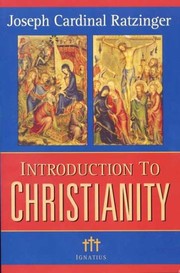
Ratzinger explores Christian belief through the Apostles’ Creed, bringing faith into conversation with the questions of modern thought.

Lonergan examines the activity of understanding itself, offering a demanding philosophical inquiry into knowledge and human knowing.

Rahner explores the human capacity to receive revelation, laying philosophical groundwork for thinking about religious belief.
Balthasar’s multivolume theological aesthetics explores the relation between divine revelation and beauty. A substantial project for committed study.

De Lubac explores the communal dimensions of Catholic belief, connecting salvation with humanity’s shared destiny in Christ.

Irenaeus answers rival teachings by setting out an account of apostolic faith, Scripture, creation, and salvation.

Origen’s early systematic treatment of Christian teaching opens a window onto the possibilities and controversies of ancient theology.

Augustine examines Christian belief in the Trinity through Scripture and an extended reflection on the human mind. A demanding work best read slowly, with attention to its developing argument.
A promised crown awakens murderous ambition. Macbeth follows the consequences of choosing power over conscience.

Thérèse’s account of ordinary love and trust in God introduces her “little way.” Small acts become a serious response to the call to holiness.

A sweeping account of humanity and Christianity that asks what makes the human person—and the person of Christ—different.

Dante’s poetic journey through Hell, Purgatory and Paradise explores sin, purification and divine love. A translation with good notes helps unlock its historical references.

Newman explains the development of his religious convictions, offering a deeply personal defense of his journey into Catholicism.

Pieper explores prudence, justice, courage, and temperance as habits of a good life, bringing classical philosophy into conversation with Christian thought.

This volume of Newman’s sermons brings searching Christian reflection to the concerns of everyday belief and conduct.

Newman’s sermons invite examination of conscience and growth in faith, combining pastoral directness with close attention to Christian teaching.

Newman asks how Christian doctrine can develop while remaining faithful to its origins, offering a major argument about continuity and change.

Adam presents Catholicism as a connected spiritual and theological whole, exploring the Church, Christ, and the life of faith.

Augustine considers the purposes of earthly society and the city of God against the upheaval of Rome. A long work of theology, history and moral reflection.

John of the Cross’s major works and shorter writings explore purification, contemplative prayer, and union with God in poetry and prose.

Aquinas gathers interpretations from earlier Christian teachers into a commentary on the Gospels, allowing readers to encounter several patristic voices together.
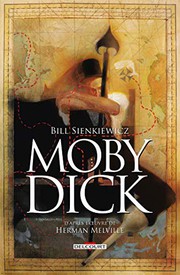
A whaling voyage becomes a vast exploration of obsession, evil and the limits of human knowledge. Its many digressions are part of the experience.

Merton recounts the restless years that led him toward Catholic faith and monastic life. A conversion memoir shaped by intellectual searching and the desire for God.

O’Connor’s collected stories confront vanity, violence, and unexpected grace through unforgettable characters and an often unsettling comic imagination.
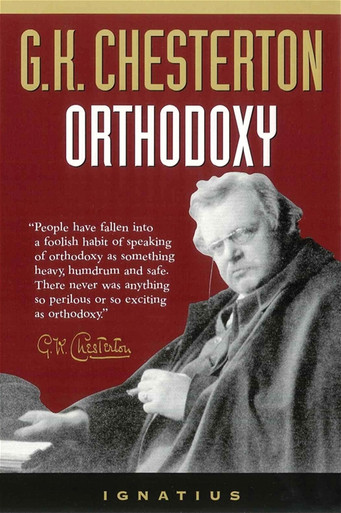
Chesterton retraces his discovery of Christian belief through wonder, paradox and common sense. Read it as an intellectual adventure rather than a systematic catechism.

Lewis builds a case for shared Christian belief from moral experience, then explores faith, conduct and the transformation of the person. It is not a specifically Catholic catechism.
A vast, question-by-question exploration of God, creation, human action and Christ. Best approached with a guide or a carefully chosen sequence of questions.