Prayer & Spiritual LifeSecondary source
The Spiritual Life: A Treatise on Ascetical and Mystical Theology
A systematic guide to asceticism, prayer, and mystical theology. For readers seeking a structured account of the Christian spiritual life.

A Jesuit priest, theologian and catechist, Fr. John Hardon devoted his work to helping Catholics understand and live their faith.
His lifetime reading plan offers a broad foundation in Catholic thought, from the early Church to modern spiritual writing.
12 verified · 247 secondary evidence · 27 unverified
250 of 254 transcription selections represented, including partial sets and unspecified editions. More’s Prayerbook and three Kolbe writing categories remain unresolved; original-guide verification is still partial.
A systematic guide to asceticism, prayer, and mystical theology. For readers seeking a structured account of the Christian spiritual life.
A biography of the Curé of Ars, tracing the life and priestly ministry of Jean-Marie Vianney.

Newman’s poem follows a dying man’s soul toward judgment, turning Christian hope and the fear of death into dramatic verse.

A prisoner’s dialogue with Philosophy asks where happiness can be found when fortune collapses. It weighs freedom, providence and the limits of worldly success.

A family tragedy opens into questions of freedom, suffering, belief and responsibility. Its conflicting voices reward a patient, attentive reading.
An exploration of the Carmelite spiritual life organized around love, inviting readers to consider the inward journey of prayer.
Wu examines natural law and the foundations of justice, bringing philosophical questions about right and wrong into conversation with legal thought.
Wu’s autobiographical account brings his personal and religious journey into conversation with the cultures of East and West.
A study of Thérèse of Lisieux’s teaching on love, offering a focused encounter with the spirituality of the Little Way.
Devotions for people whose days are full of duties. Van Zeller considers how work itself can become part of a prayerful life.

Short, candid reflections challenge spiritual complacency and examine the habits, emotions, and everyday choices that shape a Christian life.
Sheed examines marriage and family life from a Catholic perspective, connecting these familiar relationships with larger questions of faith.

Sheed reflects on his own life in relation to the Catholic Church, offering a personal counterpart to his works of apologetics.

An examination of communism through the question of the human person: what a political system assumes about people and their purpose.
Giordani turns to Mary of Nazareth as the subject of a devotional portrait, inviting reflection on her place in Christian life.
An exploration of the social dimensions of Jesus’ teaching, bringing faith into conversation with human relationships and common life.

Giordani gathers the social teaching of early Christian writers, opening a historical perspective on faith’s demands within society.

Sheen introduces the sacraments as encounters with Christ, linking Catholic worship to the experiences and needs of human life.

Sheen examines the search for inner peace through a Christian understanding of the soul, moral responsibility, and reconciliation with God.

Sheen looks back on his life and ministry in his own voice, offering a personal view of the preacher behind the public figure.

This volume surveys philosophical thought from Bentham to Dewey, offering a route into major debates of the modern period.

A survey of philosophy from Hegel to Sartre, placing influential modern thinkers within a connected intellectual history.

A historical introduction to philosophy from Descartes to Kant, following changing accounts of knowledge, reality, and reason.
Selected writings offer several entry points into Gilson’s philosophical work. A collection for readers who want to explore before choosing a longer study.

Gilson traces philosophical thinking within medieval Christianity, introducing the thinkers and arguments that shaped its intellectual tradition.

Hildebrand explores the significance of the heart and emotional life, asking how human feeling can respond to value and divine love.

A defense of priestly celibacy situated within a wider argument about faith. Read as Hildebrand’s contribution to a contested ecclesial discussion.

Hildebrand reflects on marriage as a relationship of faithful personal love, joining philosophical attention to a Catholic understanding of the sacrament.

A sustained examination of the attitudes involved in Christian transformation, including humility, recollection and love. Best suited to reflective, deliberate reading.

Journet introduces theology through the wisdom of faith, offering readers a path into the Church’s reflection on divine revelation.

A focused exploration of grace: God’s gift of life and friendship, and its significance for the Christian understanding of the person.

Journet considers Peter’s primacy through Catholic and Protestant perspectives, addressing a central question in disagreements about Church authority.
A theological study of the Church’s apostolic hierarchy, examining ordained authority within Journet’s larger account of the Church.

The life of Peter Claver brings readers into the world of his ministry among enslaved Africans in Cartagena.
Lunn challenges what he regards as modern departures from rational thought. A polemical work for readers interested in faith’s intellectual defense.

Lunn recounts his path toward Catholic belief, giving a personal account of the questions and arguments behind his conversion.

Maritain brings scholastic philosophy to questions of artistic making and beauty, asking what art is and what makes it good.

An extended philosophical study of different kinds of knowing, from scientific and philosophical inquiry to the knowledge associated with contemplation.

Essays bring prayer and intellectual life into conversation. Maritain considers how the pursuit of truth relates to spiritual attention.

Maritain introduces philosophy’s central questions and methods from a Thomistic perspective, providing a foundation for further study.

Daily meditations centered on great prayers offer a structured way to bring reflection into an ordinary routine.

Alberione considers Mary’s virtues as subjects for devotion and imitation, connecting Marian reflection with growth in Christian life.

Brief selections from Alberione’s writings and talks offer an introduction to his apostolic spirituality, suitable for reading a little at a time.
A study of personal formation in relation to Christ, inviting readers to consider how Christian identity shapes character.

Mauriac reflects on the Eucharist through the mystery of Holy Thursday, bringing a novelist’s sensibility to devotional meditation.

A portrait of Margaret of Cortona offers an encounter with the saint’s life through Mauriac’s religious imagination.

Mauriac explores the danger of self-righteousness in a novel about religious respectability, judgment, and the difficulty of genuine charity.

Mauriac turns his attention to the life of Jesus, offering a literary and devotional approach to the Gospel story.

Dawson examines religion’s formative place in medieval civilization, asking how Christian belief shaped the culture of the West.

Dawson questions an education detached from its religious and cultural inheritance, inviting debate about what schools should pass on.

A historical inquiry into religion and ideas of progress, challenging readers to reconsider how civilizations develop and understand themselves.

Selections from Dawson’s work explore religion’s place in world history. A broad entry point into his approach to culture and civilization.
Burton looks back on her own life in autobiographical reminiscences, offering the personal voice behind her religious biographies.

A biography of Pope Pius XII, presenting his life through Katherine Burton’s historical and religious perspective.
The life of Mother Alphonsa offers a portrait of vocation shaped by sorrow and service to others.
Burton traces the life of Giuseppe Sarto, who became Pope Pius X, in a biographical account of his path to the papacy.
Guardini’s meditations follow Jesus on the way to Calvary, offering a companion for praying the Stations of the Cross.

An exploration of freedom and grace asks how human decisions relate to divine action and the course of a life.

Adam examines the religious roots of the Reformation, offering a Catholic interpretation of a decisive division in Christian history.
A theological reflection on Christ’s nearness to humanity, inviting readers to think about what it means to call Jesus our brother.

Adam considers the identity of Jesus as the Son of God, bringing theological reflection to the central claim of Christian faith.
Daniel-Rops offers a book-length portrait of Mary, inviting readers to reflect on her place in the Christian story.

The second volume of Daniel-Rops’s account of Catholic renewal continues his historical study of the Catholic Reformation.

Daniel-Rops begins his account of the Catholic Reformation, exploring renewal within the Church during an age of religious division.

This second volume continues Daniel-Rops’s history of the Church in the early medieval world.

The opening volume of a history of the Church in the early Middle Ages, part of Daniel-Rops’s larger narrative of Christianity.

The second volume continues the story of the apostolic and martyr Church, exploring Christianity’s early historical setting.

Daniel-Rops introduces the Church of the apostles and martyrs, beginning an account of Christianity’s formative centuries.

A concise account of the stages of spiritual growth, introducing the traditional movement through purification, illumination, and union with God.

A theological study of Christian perfection and contemplation, drawing especially on Thomas Aquinas and John of the Cross.

Meditations on Mary’s sorrows consider how faith and love can transform the experience of suffering.

Vann explores the Beatitudes and their social implications, asking how the mercy of God should shape life with other people.

A biographical study of Paul invites readers to follow the apostle’s life and encounter his place in early Christianity.

Ricciotti offers a sustained account of the life of Christ, bringing historical study into contact with the Gospel narrative.

A theological exploration of purgatory and heaven, addressing Christian questions about purification and life with God beyond death.
Arendzen examines what Christians believe about the dead, introducing the theological field concerned with humanity’s final destiny.
A treatment of the Trinity written for lay readers, addressing Christianity’s confession of one God in three persons.
A biography of Bernadette Soubirous offers a sustained account of the life associated with the apparitions at Lourdes.
Meditations on trust invite readers to consider confidence in God as a habit of the spiritual life.

An exploration of identification with Christ, considering what it means for a Christian’s life to become increasingly united with his.
Knox offers commentary on the Gospels, providing a companion for readers who want to consider their meaning more closely.

Knox recounts his religious journey toward Catholicism, using the image of a journey to illuminate conversion and spiritual belonging.

The third volume in Pourrat’s historical study continues his exploration of the development of Christian spirituality.

This second volume continues Pourrat’s history of Christian spirituality, offering a historical setting for the life of prayer.

The first volume introduces Pourrat’s historical account of Christian spirituality and its development across the Church’s life.
Jørgensen tells his own story in an autobiographical work, offering personal context for the writer known for his lives of saints.

Journeys through Franciscan Italy connect places and spiritual memory, offering a travel companion for readers drawn to Franciscan history.
The second volume follows Bridget of Sweden from 1349 to 1373, continuing Jørgensen’s biographical portrait.
This first volume traces Bridget of Sweden’s life from 1303 to 1349, beginning a sustained account of her story.

Jørgensen offers a biographical encounter with Catherine of Siena, placing the saint’s life at the center of his narrative.
Letters from Claudel to his goddaughter reveal a personal side of the poet’s religious and literary voice.

Claudel transforms the story of Christopher Columbus into a lyrical drama, using theatrical form to explore a historical life.

A religious drama in which love, sacrifice, and suffering unfold through Claudel’s poetic theatrical language.

Claudel’s expansive drama sets human love and spiritual longing within a large theatrical world. A work for readers drawn to poetic ambition.
Belloc recounts Marie Antoinette’s life, offering a biographical route into the world overturned by the French Revolution.

Belloc argues that modern economic arrangements can lead toward new forms of servitude, challenging assumptions about property, freedom, and security.

A novel of moral conflict and the search for happiness, with the Masterful Monk confronting competing visions of human nature.

Two works in Dudley’s exploration of human happiness bring religious belief into conflict with alternative accounts of humanity’s future.

Walsh approaches the Inquisition through historical personalities. A Catholic interpretation to read with attention to its perspective and arguments.
A biography of Isabella of Spain offers Walsh’s interpretation of the queen and the religious world of her reign.

Undset turns from historical fiction to the lives of saints, offering readers another way into the religious past.

Undset’s autobiographical writing recalls the years of childhood, offering a personal counterpart to her historical novels.

Carrel recounts a journey to Lourdes, placing the pilgrimage at the center of a personal encounter with questions of belief.
Carrel reflects on the human person from a scientific and philosophical perspective. A historical work whose claims call for critical reading.

Leen considers the Holy Spirit’s action in the soul, connecting Christian teaching with the inner life of prayer.

Leen examines the Church’s encounter with judgment and opposition through the image of Christ before Pilate.

An exploration of becoming like Christ asks how his life can shape the believer’s character and spiritual growth.

Leen presents mental prayer as a means of spiritual growth, offering a sustained treatment of the practice of interior prayer.
Ghéon reflects on the art of theatre, inviting readers interested in drama to consider its craft and expressive possibilities.

A Christmas dramatic work brings the feast into a marketplace setting, joining religious subject matter with theatrical presentation.
Three plays bring comedy and the lives of Francis and Bernard into Ghéon’s religious theatre.

Ghéon turns to the saints as subjects of spiritual reflection, inviting readers to look beyond familiar outlines of holy lives.

Edith Stein studies John of the Cross and the spiritual meaning of the cross, joining philosophical seriousness with Carmelite contemplation.

Selections from Maximilian Kolbe’s writings offer direct contact with his spiritual voice, gathered in a single reader.
Lagrange offers an account of the Gospel of Jesus Christ, bringing biblical scholarship to a sustained reading of its subject.
A two-volume study of Paul’s theology provides an extended companion to the apostle’s teaching and letters.

The second volume continues Prat’s study of Jesus’ life, teaching, and work, completing a sustained theological account.

The first volume opens Prat’s study of Jesus’ life, teaching, and work, inviting readers into a sustained theological account.

Cabrol examines prayer among the early Christians, offering historical context for practices inherited by later generations.

A study of the Mass combines its doctrine and history, helping readers place Catholic worship within a longer tradition.
Cabrol explores the Mass across Western liturgical rites, introducing readers to variety within the history of Christian worship.

A historical and spiritual introduction to liturgical prayer asks how the Church’s common worship has developed and what animates it.
Pastor’s extensive history follows the papacy from the late Middle Ages, drawing on archival research across a substantial multivolume work.
Gospel meditations gathered into one edition offer material for prayerful reading alongside the biblical accounts of Jesus.

An anthology introduces Marmion’s spiritual writings through selected passages, offering a manageable entry into his Christ-centered teaching.
Meynell’s collected poetry offers a sustained encounter with her verse, inviting slow attention to language, perception, and feeling.

A collection of Meynell’s essays offers a different encounter with the writer’s voice from her poetry.

Gibbons reflects on the calling represented by an ambassador of Christ, directing attention to the responsibilities of religious ministry.

Gibbons explains Catholic belief and practice for readers seeking an introduction to the Church’s teaching, worship, and authority.

Poulain studies the graces associated with interior prayer, offering a detailed work for readers exploring mystical theology.

A historical novel of love and Catholic fidelity under persecution in Elizabethan England, where personal loyalties carry a dangerous cost.
Benson’s supernatural novel explores spiritualism and its dangers, placing the desire to reach beyond death within a religious drama.

Two collections of Benson’s supernatural stories offer fictional encounters with realities beyond ordinary experience.

Religious essays consider Christ’s presence in the Church, inviting reflection on the relationship between belief in Jesus and ecclesial life.

Thompson’s poetry offers an encounter with a richly figurative religious imagination, rewarding readers willing to linger over its language.
Boylan presents the mystical body of Christ as a foundation for spiritual life, connecting personal holiness with membership in the Church.

Patmore’s verse offers a poetic exploration of human experience through an intensely attentive literary voice.

Newman’s addresses bring Christian teaching to a varied audience, preserving the direct and searching character of his preaching.

Newman’s poem about a soul approaching judgment appears alongside meditations on the Stations of the Cross in this combined edition.

Ullathorne considers patience and humility as virtues to cultivate, offering material for reflection on everyday spiritual formation.

Lectures examine the foundations of Christian virtue, inviting readers to consider how a life of faith forms character.

Scheeben’s theological study of Mary offers a sustained treatment for readers seeking more than an introductory devotional account.

Scheeben explores the interconnected mysteries of Christian faith in an ambitious work of theology suited to sustained study.

Brownson’s essays bring theology into conversation with politics and socialism, showing a Catholic thinker engaging the arguments of his age.
These volumes of Guéranger’s work follow the liturgical year, offering reflections shaped by the Church’s cycle of worship.
The second part of Eymard’s study continues his exploration of the Eucharist and growth toward Christian perfection.
Eymard explores the relationship between Eucharistic devotion and Christian perfection in the first part of this spiritual work.

A month of reflections joins Marian devotion with attention to the Blessed Sacrament, offering a structured devotional companion.

Eymard directs attention to receiving Holy Communion with greater spiritual awareness, encouraging preparation and thanksgiving.

Meditations on Christ’s real presence in the Eucharist offer material for adoration and a deeper understanding of Eucharistic devotion.

Faber’s spiritual conferences consider subjects including kindness, death, and self-deception, bringing the examination of daily life into prayer.

A collection of Faber’s poems offers an encounter with the literary voice behind his devotional and spiritual writings.

Faber reflects at length on the Blessed Sacrament, making Eucharistic devotion the focus of an expansive spiritual study.

A sustained examination of growth in holiness considers the progress and difficulties of the spiritual life.

A devotional account of Christ’s Passion drawn from visions attributed to Emmerich. Read as private revelation rather than a Gospel narrative.

These volumes recount biblical events through visions attributed to Emmerich, offering devotional material distinct from Scripture itself.

A devotional life of Mary based on visions attributed to Emmerich. Its narrative belongs to private revelation rather than the biblical text.

Liguori’s spiritual writing considers salvation and growth in holiness, inviting serious reflection on the direction of a Christian life.

Reflections on Jesus’ Passion and death provide material for meditation on suffering, redemption, and the love revealed at the cross.

Liguori gathers Marian teaching and devotion into a sustained invitation to reflect on Mary’s place in Christian life.

Liguori’s Eucharistic reflections offer material for devotion to Christ in the sacrament and for prayerful spiritual reading.

A year-spanning collection of saints’ lives offers daily encounters with Christian witnesses across different places and periods.

Margaret Mary recounts her life in her own words, offering a personal encounter with the saint associated with Sacred Heart devotion.
Crashaw’s English poetry brings readers into the intense imagery and devotional language of a seventeenth-century religious poet.

Bellarmine invites contemplation of the created world as a path toward God, joining spiritual reflection with attention to creation.

Bellarmine treats preparation for death as a question about how to live, inviting reflection on a life directed toward God.

Teresa recounts her life and experiences of prayer with candor, offering a personal introduction to one of the Church’s great spiritual teachers.

Reminiscences, a spiritual diary, letters, and the Spiritual Exercises gather several ways of encountering Ignatius’ life and teaching.

Ignatius recounts his journey of conversion and discernment, giving personal context to the spirituality associated with his name.

A broad selection of More’s essays, prayers, poems, letters, and other works reveals the range of his intellectual and spiritual life.

Catherine reflects on purgatory through the soul’s purification and longing for God, offering a concentrated spiritual meditation.

Pilgrims exchange stories on the road to Canterbury in Chaucer’s lively portrait of human motives, social life, and religious culture.

Catherine’s spiritual dialogue explores divine providence, love, and the soul’s response to God in the form of an extended conversation.

Medieval accounts of saints’ lives reveal a world of devotion and storytelling, with lasting significance for Christian art and literature.

A Marian devotional work presented under Bonaventure’s name, inviting reflection on the Virgin Mary through the tradition of medieval spirituality.

Several spiritual works gathered under Bonaventure’s name offer paths into contemplation, love, and reflection on the life of Christ.

An anthology combines Francis’ writings with biographical and devotional material, offering several perspectives on the saint and his legacy.

Bernard’s homilies in praise of Mary bring monastic preaching into Marian devotion, inviting slow, prayerful reading.

Bernard asks why and how God should be loved, tracing the movement of love beyond self-interest toward God himself.

A study of humility and pride examines opposing movements of the spiritual life and the habits through which each takes hold.

Anselm asks why God became human, presenting a sustained argument about sin, reconciliation, and the meaning of the Incarnation.

Anselm’s prayers and meditations offer direct material for devotion, revealing a different register from his philosophical arguments.

Bede tells the story of Christianity among the English, preserving an influential early account of the Church’s development in Britain.

Vincent of Lérins considers how Christian teaching is recognized and preserved, raising enduring questions about tradition and doctrinal continuity.

Jerome and Gennadius offer brief accounts of Christian writers, opening a historical window onto the early Church’s literary life.

Selected letters reveal Jerome as a correspondent, giving personal form to concerns of Christian learning and life.

Augustine answers a request for a compact account of Christian belief and life. Faith, hope and charity organize his discussion of the Creed, prayer and the love of God.

Augustine examines true worship and the search for God, bringing philosophical inquiry into conversation with Christian belief.

Chrysostom reflects on the responsibilities and difficulties of priestly ministry, emphasizing the seriousness of care for souls.

Prudentius’ hymns offer an encounter with early Christian Latin verse and its expression of belief through poetry.
Translated poems introduce Prudentius’ early Christian poetic world, making his religious verse available to readers without Latin.

Athanasius recounts Anthony’s life in the desert, offering an influential early portrait of ascetic struggle and Christian holiness.

Athanasius explores why the Word became flesh, connecting the Incarnation with humanity’s restoration and victory over death.

Lactantius condenses his defense of Christian belief into a shorter work, offering a compact encounter with early Christian apologetics.

Two works address Christians who faltered under persecution and the unity of the Church, revealing pressing concerns of early Christian community.

Three early Christian writers interpret the Lord’s Prayer, offering historical companions for praying words that remain familiar today.

A two-book collection provides an entry into Tertullian’s early Christian writing. Consult the edition’s contents for the works included.

Writings on discipline, morality, and ascetic practice show Tertullian engaging the practical demands of early Christian life.

Irenaeus presents Christian teaching through the unfolding story of Scripture, connecting apostolic faith with God’s work in history.

Justin defends Christians and their beliefs before a non-Christian audience, offering an early account of Christian worship and intellectual argument.

Letters written by Ignatius of Antioch address Christian communities, emphasizing their common life, leadership, and fidelity to Christ.

A theological and spiritual study of Mary considers her relationship to Christ’s saving work and to the believer’s interior life.

Aquinas develops an extended account of truths about God and creation, using philosophical argument alongside discussion of revealed teaching.

A searching autobiography addressed to God: Augustine follows desire, ambition and grace from his youth through conversion. Later books turn to memory, time and creation.

Benedict’s rule orders communal life around prayer, work, humility, and mutual responsibility, offering wisdom beyond the monastery as well.

Irenaeus answers rival teachings by setting out an account of apostolic faith, Scripture, creation, and salvation.

Chesterton reflects on conversion and the intellectual obstacles surrounding the Catholic Church. Its essays combine personal conviction with his characteristic reversals of familiar assumptions.

An early account of the Church’s development, preserving evidence about Christian communities, teachers, controversies and persecution. A modern annotated translation helps place its claims in historical context.

Stein’s essays examine womanhood and vocation, bringing philosophical reflection into conversation with education and Christian life.

Sheen reflects on marriage as a relationship involving husband, wife, and God, connecting love with the sacramental life.

Two lovers struggle to marry amid coercion, upheaval, and plague in seventeenth-century Lombardy. Manzoni’s novel explores providence, injustice, and forgiveness.

A detailed account of spiritual growth traces the interior life through its traditional stages, drawing on major theological and mystical teachers.

Francis de Sales explores divine love at length, considering how the human heart responds to God and grows in charity.

Francis de Sales offers practical spiritual counsel for people living in the world. Prayer, work, friendship and ordinary obligations all belong within a devout life.

Montfort develops a Christ-centered spirituality of devotion and consecration to Mary. Historical language benefits from patient reading and context.

Chautard argues that Christian service must be nourished by an interior life. A searching companion for readers whose activity has crowded out prayer.

Boylan presents Christian life as a response to Christ’s love, connecting personal prayer with the believer’s place in his body, the Church.

Brief spiritual counsels on humility, detachment and following Christ. Its direct, demanding voice invites reflection rather than hurried reading.

Thérèse’s account of ordinary love and trust in God introduces her “little way.” Small acts become a serious response to the call to holiness.

Teresa instructs her community in prayer and the virtues that sustain it, giving particular attention to the Lord’s Prayer.

Teresa describes the soul’s deepening life of prayer through the image of a castle with many dwellings. A guide to contemplative life, best read slowly.

A sweeping account of humanity and Christianity that asks what makes the human person—and the person of Christ—different.

Memory, friendship and a Catholic family frame this novel of longing and grace. Its religious meaning unfolds through flawed people rather than neat lessons.

Undset follows a woman’s life in medieval Norway through love, family, failure, and faith, giving moral choices their full human weight.

A historical novel set in Nero’s Rome places love and early Christian witness against the violence and power of the imperial world.

Newman argues for a broad intellectual education and examines theology’s place within it, asking what a university is for.

An idealistic knight and his practical companion travel through adventures that test the boundaries between imagination, dignity, and delusion.

Dante’s poetic journey through Hell, Purgatory and Paradise explores sin, purification and divine love. A translation with good notes helps unlock its historical references.

Newman explains the development of his religious convictions, offering a deeply personal defense of his journey into Catholicism.

Chesterton’s portraits of Francis and Aquinas bring two contrasting saints together, inviting readers to encounter their spiritual and intellectual vitality.

Walsh recounts the events associated with Our Lady of Fatima, offering a historical and devotional treatment of the apparitions.

Knox examines religious movements marked by intense claims of spiritual inspiration, offering a historical study of enthusiasm and its difficulties.

This volume of Newman’s sermons brings searching Christian reflection to the concerns of everyday belief and conduct.

Newman’s sermons invite examination of conscience and growth in faith, combining pastoral directness with close attention to Christian teaching.

Guardini reflects on the person and life of Jesus through the Gospels. Its chapters invite meditation as well as theological attention.

Guardini examines the passing of a cultural age and the demands of power, asking what responsibility means in a changing world.

Adam presents Catholicism as a connected spiritual and theological whole, exploring the Church, Christ, and the life of faith.

Augustine considers the purposes of earthly society and the city of God against the upheaval of Rome. A long work of theology, history and moral reflection.

John of the Cross’s major works and shorter writings explore purification, contemplative prayer, and union with God in poetry and prose.

Belloc recounts a journey on foot toward Rome, combining travel, reflection, and a vivid sense of place.

Belloc argues for Catholicism’s central place in the formation of Europe, presenting an influential and strongly stated interpretation of its history.

A historical novel of conflict in seventeenth-century Poland, continuing Sienkiewicz’s trilogy through war, loyalty, and personal struggle.

The opening novel of Sienkiewicz’s trilogy places personal loyalties and love within the violence of seventeenth-century conflict.
Chesterton introduces Thomas Aquinas through a lively portrait of his character and thought. An inviting doorway into a much larger philosophical world.

Sheed connects Catholic doctrine with a coherent understanding of reality. An ambitious introduction to thinking clearly about God and the human person.
A vast, question-by-question exploration of God, creation, human action and Christ. Best approached with a guide or a carefully chosen sequence of questions.
Chesterton considers Francis through the freedom of radical gratitude and poverty. A vivid spiritual portrait rather than an exhaustive scholarly biography.
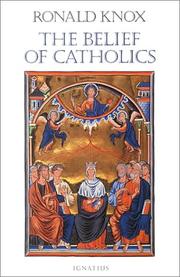
Knox explains the foundations of Catholic belief, offering an apologetic account for readers examining why the Church makes its claims.
Lactantius presents a sustained defense of Christian belief across seven books. This is the full work, distinct from his shorter Epitome.
Chrysostom addresses vanity and the upbringing of children, bringing early Christian moral teaching into the responsibilities of family life.
Aquinas presents Christian teaching in catechetical form, offering a more direct entry into his religious instruction than his larger academic works.
Marmion centers the spiritual life on union with Christ, inviting readers to understand holiness as participation in his life.
Marmion reflects on the mysteries of Christ’s life, offering theological meditations suited to reading alongside the Church’s liturgical seasons.
Goodier meditates on Christ’s Passion and death, inviting close attention to the Gospel events and their spiritual significance.
Goodier follows the public ministry of Jesus, offering an extended devotional companion to the Gospel accounts.

Goodier’s devotional work directs attention to Christ as the Prince of Peace, offering material for spiritual reading.
Arendzen examines the relationship between reason and revelation, introducing questions about how thought and faith relate.
Ricciotti offers a history of Israel, providing a wider historical setting for readers studying the biblical world.

A historical account follows Christianity from Diocletian to Constantine, tracing the passage from persecution toward a changed imperial setting.

Waugh’s dark satire follows the collapse of an English marriage and a social world, exposing cruelty beneath polished surfaces.
Waugh recounts the life of the Jesuit Edmund Campion, placing his mission and martyrdom within Elizabethan England.

Lunn explores Switzerland through literary, historical, and geographical landmarks, offering a guide for readers drawn to place and cultural memory.
Van Zeller introduces an approach to Christian Scripture, inviting readers to make biblical reading part of their spiritual attention.
Van Zeller considers the end through a work explicitly framed as a projection rather than a prophecy, inviting reflective reading.
Justin addresses a non-Christian audience in defense of Christian belief and practice, offering an important early apologetic witness.
Justin continues his defense of Christians, responding to opposition and explaining the convictions for which they were judged.
Cyprian interprets the Lord’s Prayer, offering an early Christian companion to its petitions and their meaning for common life.
Bonaventure presents a contemplative ascent toward God, moving through creation and the soul toward a mystery beyond discursive thought.

Bonaventure explores purification, illumination, and perfection as dimensions of spiritual growth, offering a compact guide to the contemplative life.
More considers how faith can sustain people under affliction, framing his reflections as a conversation about courage and trust.
An imagined island society becomes a means of questioning property, politics, and social custom in More’s provocative dialogue.
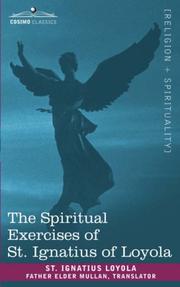
Ignatius offers a structured course of prayer, reflection, and discernment, designed to help a person respond more freely to God.
John of the Cross examines the detachment and purification involved in growth toward union with God, offering demanding spiritual instruction.
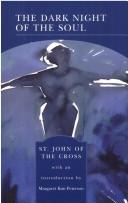
John of the Cross explores spiritual purification through the image of night, addressing experiences that can unsettle a life of prayer.
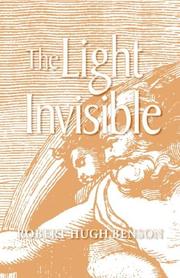
Benson’s supernatural stories invite readers to imagine spiritual realities becoming perceptible within ordinary human experience.
Maritain considers prayer in relation to intellectual life, inviting reflection on how understanding and contemplation belong together.
Dudley challenges accounts of human happiness that leave religion behind, presenting a Catholic response to humanitarian claims.
Tertullian’s apologetic writings defend Christianity in its early setting, revealing arguments directed toward a largely non-Christian public.
Anselm’s theological works examine the Incarnation and virgin conception, inviting sustained thought about central Christian claims.

Francis’ prayers, instructions, and other writings offer direct contact with his spiritual voice, alongside later stories told about him.
Traditional stories of Francis and his companions portray simplicity, joy, and devotion. Read as a beloved spiritual collection rather than a modern biography.
Ignatius’ correspondence and instructions show spiritual guidance taking practical form in relationships, responsibilities, and decisions.
Eymard reflects on Holy Communion, inviting readers to deepen their preparation, reception, and thanksgiving.
A compact treatment of humility and patience offers material for examining the quiet virtues of everyday Christian life.
Dudley returns to the Masterful Monk in a further novel, continuing his fictional exploration of human happiness and moral choices.
A selection of Newman’s preaching and addresses offers several encounters with his searching religious voice and pastoral concerns.