
LiteraturePublished recommendation
The Lord of the Rings
A fellowship undertakes a desperate journey through Middle-earth. Friendship, mercy, temptation and sacrifice give its great adventure lasting moral depth.

Brandon Vogt is a Catholic author and publisher, and the founder of ClaritasU.
His best-books guide provides a useful starting library. It credits Fr. John McCloskey, whose recommendations form the list’s foundation.
102 verified · 0 secondary evidence · 5 unverified
Vogt’s list and McCloskey’s expanded list share one source count. Some edition scopes still need checking.
A fellowship undertakes a desperate journey through Middle-earth. Friendship, mercy, temptation and sacrifice give its great adventure lasting moral depth.
A systematic guide to asceticism, prayer, and mystical theology. For readers seeking a structured account of the Christian spiritual life.
Fulton Sheen meditates on the life, teaching, death and resurrection of Jesus. A sustained encounter with Christ through the Gospel narrative.
A biography of the Curé of Ars, tracing the life and priestly ministry of Jean-Marie Vianney.

Lewis considers how suffering can coexist with belief in a good God. A philosophical exploration rather than a promise of easy consolation.

A sustained examination of the attitudes involved in Christian transformation, including humility, recollection and love. Best suited to reflective, deliberate reading.

A sustained appeal to the necessity of prayer, connecting the practice of turning to God with salvation and spiritual growth.

An adapted presentation of Catherine of Siena’s spiritual dialogue. Check the edition carefully when choosing between an accessible adaptation and the complete text.

Poems and prose offer an introduction to Hopkins’ distinctive language, attentive observation, and religious imagination.

A searching autobiography addressed to God: Augustine follows desire, ambition and grace from his youth through conversion. Later books turn to memory, time and creation.

Stein’s essays examine womanhood and vocation, bringing philosophical reflection into conversation with education and Christian life.

Sertillanges considers the habits and conditions that sustain serious study, treating intellectual work as a disciplined way of life.

Rice introduces natural law through questions and answers, connecting moral reasoning with debates about how people should live together.

Monti combines biography and writings to introduce Thomas More, focusing attention on the relationship between his life and convictions.

A guide to Rome offers historical and cultural context for exploring the city, suitable for travelers and armchair readers alike.

John Paul II responds to questions about Christianity and the modern world, offering a conversational entry into his thought.

Sheen reflects on marriage as a relationship involving husband, wife, and God, connecting love with the sacramental life.

Scupoli presents spiritual struggle as a daily discipline, inviting readers to examine temptation and cultivate trust in God.
A practical introduction to mental prayer encourages a conversational relationship with Christ and a more regular interior life.

Perquin explores relationship with God as Father, inviting readers to deepen the personal meaning of a familiar Christian prayer.

Written near the end of More’s life, this meditation on Christ’s agony considers fear, faithfulness, and prayer under pressure.

Martínez explores devotion to the Holy Spirit, connecting the Spirit’s work with growth in holiness and prayer.

Two lovers struggle to marry amid coercion, upheaval, and plague in seventeenth-century Lombardy. Manzoni’s novel explores providence, injustice, and forgiveness.

Practical reflections on kindness in speech and action. A useful companion for bringing charity into the small encounters of daily life.

Granada calls readers toward repentance and a virtuous life, presenting spiritual instruction aimed at a serious change of heart.

A short spiritual work invites readers to seek peace by conforming their desires to God’s will, including amid disappointment.

A detailed account of spiritual growth traces the interior life through its traditional stages, drawing on major theological and mystical teachers.

Faber explores devotion to Jesus through the many ways love can shape a Christian life, offering expansive spiritual reflection.

Escrivá’s meditations accompany the Stations of the Cross, providing a compact resource for prayer on Christ’s Passion.

Three collections of brief spiritual reflections invite readers to connect faith with the decisions and duties of ordinary life.

Homilies explore friendship with God through Christian virtues and everyday life, giving extended form to Escrivá’s spiritual teaching.

Escrivá’s homilies bring the mysteries of Christ into contact with daily life, inviting reflection on holiness in ordinary circumstances.

Francis de Sales explores divine love at length, considering how the human heart responds to God and grows in charity.

Francis de Sales offers practical spiritual counsel for people living in the world. Prayer, work, friendship and ordinary obligations all belong within a devout life.

Montfort develops a Christ-centered spirituality of devotion and consecration to Mary. Historical language benefits from patient reading and context.

Reflections on receiving the present moment in trust and surrender to God. The text invites readers to seek holiness within ordinary circumstances.

Chautard argues that Christian service must be nourished by an interior life. A searching companion for readers whose activity has crowded out prayer.

Burke examines marriage through the connection between love, commitment, and happiness, offering a Catholic reflection on the marital covenant.

Boylan presents Christian life as a response to Christ’s love, connecting personal prayer with the believer’s place in his body, the Church.

A practical treatment of obstacles in mental prayer addresses readers who find interior prayer difficult or discouraging.

Baur invites readers into silence with God, offering material for reflective prayer and the cultivation of an interior life.

Baur considers regular confession as part of spiritual growth, directing attention to the sacrament’s place in ongoing Christian formation.

Aumann offers a systematic introduction to spiritual theology, examining the principles and practices of growth toward holiness.

Brief spiritual counsels on humility, detachment and following Christ. Its direct, demanding voice invites reflection rather than hurried reading.

Thérèse’s account of ordinary love and trust in God introduces her “little way.” Small acts become a serious response to the call to holiness.

Teresa instructs her community in prayer and the virtues that sustain it, giving particular attention to the Lord’s Prayer.

Teresa describes the soul’s deepening life of prayer through the image of a castle with many dwellings. A guide to contemplative life, best read slowly.

Brief meditations associated with Mother Teresa’s Simple Path invite reflection on prayer, love, and service in daily life.

Oursler retells the life of Jesus in narrative form, offering a literary approach to the familiar Gospel story.

A collected edition gathers major Lewis works on belief, moral life, and imagination, giving readers several different starting points.

A sweeping account of humanity and Christianity that asks what makes the human person—and the person of Christ—different.
Farrell and Healy present Thomistic teaching for a wider readership, offering a compact guide to life through Aquinas’ thought.

Memory, friendship and a Catholic family frame this novel of longing and grace. Its religious meaning unfolds through flawed people rather than neat lessons.

Undset follows a woman’s life in medieval Norway through love, family, failure, and faith, giving moral choices their full human weight.

A historical novel set in Nero’s Rome places love and early Christian witness against the violence and power of the imperial world.

Percy’s satirical novel follows a troubled physician through a fractured America, bringing questions about the soul into an unsettling comic world.

Percy uses the form of a self-help book to unsettle comfortable ideas about identity, language and modern life. Satire opens into serious philosophical questions.

Newman argues for a broad intellectual education and examines theology’s place within it, asking what a university is for.

Eliot considers the relationship between Christianity and culture, exploring how belief relates to the shape of a society.

An idealistic knight and his practical companion travel through adventures that test the boundaries between imagination, dignity, and delusion.

A young rural priest records his loneliness, difficulties, and encounters with grace in a novel attentive to hidden spiritual life.
![Cover of Lord of the World [Facsimile of 1907 First British Edition]](https://covers.openlibrary.org/b/isbn/1614277915-M.jpg?default=false)
Benson imagines a future confrontation between Catholic faith and a powerful secular order, creating a religious dystopia about allegiance and hope.

Dante’s poetic journey through Hell, Purgatory and Paradise explores sin, purification and divine love. A translation with good notes helps unlock its historical references.

Wegemer presents Thomas More’s life through the theme of courage, offering a biographical introduction to the statesman and saint.

Suárez reflects on Mary of Nazareth, inviting readers to consider her life as a subject for Christian meditation.

Newman explains the development of his religious convictions, offering a deeply personal defense of his journey into Catholicism.

Muggeridge introduces Mother Teresa and her work, reflecting on the witness of a life given to others.
John XXIII’s spiritual writings reveal a life of prayer and self-examination, offering personal context for the pope’s public ministry.

Day recounts her conversion and the development of her Catholic social commitment, tracing a search for faith, community, and service.

Chesterton’s portraits of Francis and Aquinas bring two contrasting saints together, inviting readers to encounter their spiritual and intellectual vitality.

Walsh recounts the events associated with Our Lady of Fatima, offering a historical and devotional treatment of the apparitions.

Leclercq explores monastic culture through its union of study and the desire for God, illuminating the spiritual setting of medieval learning.

Knox examines religious movements marked by intense claims of spiritual inspiration, offering a historical study of enthusiasm and its difficulties.

Selected writings introduce Dawson’s understanding of Christianity and European culture, offering a broad sampling of his historical perspective.

The fifth volume of Carroll’s history continues his account of Christendom through the theme of revolution and religious conflict.

Carroll follows the divisions of Christendom from 1517 to 1661, presenting a Catholic narrative of the Reformation era.

The third volume of Warren Carroll’s history follows Christendom from 1100 to 1517. It connects major religious events with the political and cultural struggles of the period.

The second volume of Warren Carroll’s history covers 324–1100. It follows Christian civilization through imperial change and the formation of medieval Europe.

The first volume of Carroll’s history begins his account of the formation of Christendom, establishing the setting for the larger series.

Belloc considers old and emerging challenges to Catholic belief, offering a polemical view of the Church’s cultural opponents.

Belloc offers his explanation of the Reformation, connecting religious change with the historical forces that shaped Europe.

Belloc examines major challenges to Christian orthodoxy, interpreting their religious claims and historical consequences from a Catholic perspective.

Pieper explores prudence, justice, courage, and temperance as habits of a good life, bringing classical philosophy into conversation with Christian thought.

A systematic reference to Catholic doctrine, connecting theological claims with Scripture and tradition. Best suited to readers seeking precise explanations and deeper study.

This volume of Newman’s sermons brings searching Christian reflection to the concerns of everyday belief and conduct.

Newman’s sermons invite examination of conscience and growth in faith, combining pastoral directness with close attention to Christian teaching.

Newman asks how Christian doctrine can develop while remaining faithful to its origins, offering a major argument about continuity and change.

Kreeft guides readers through Pascal’s Pensées, using their questions about happiness, reason, and faith to address modern unbelief.

Scott and Kimberly Hahn tell the story of their journey into the Catholic Church, including its theological questions and effects on their marriage.

Guardini reflects on the person and life of Jesus through the Gospels. Its chapters invite meditation as well as theological attention.

Guardini examines the passing of a cultural age and the demands of power, asking what responsibility means in a changing world.

Bouyer examines Protestantism’s spiritual principles and historical forms, offering a Catholic engagement with the tradition from which he converted.

Adam presents Catholicism as a connected spiritual and theological whole, exploring the Church, Christ, and the life of faith.

Augustine considers the purposes of earthly society and the city of God against the upheaval of Rome. A long work of theology, history and moral reflection.

John of the Cross’s major works and shorter writings explore purification, contemplative prayer, and union with God in poetry and prose.

Endō’s novel follows a missionary into persecuted Japan, confronting painful questions about faithfulness, suffering, and the apparent silence of God.

Merton recounts the restless years that led him toward Catholic faith and monastic life. A conversion memoir shaped by intellectual searching and the desire for God.

O’Connor’s collected stories confront vanity, violence, and unexpected grace through unforgettable characters and an often unsettling comic imagination.
Chesterton retraces his discovery of Christian belief through wonder, paradox and common sense. Read it as an intellectual adventure rather than a systematic catechism.

Letters from a senior devil to his apprentice expose the small habits of pride, distraction, and self-deception that corrode spiritual life.

Sheed closely considers the person and life of Jesus, encouraging readers to move beyond familiarity toward a more attentive encounter.

A concise introduction to major Catholic doctrines, written to help ordinary readers understand what they profess in the Creed.
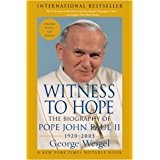
Weigel’s extensive biography traces John Paul II’s life and papacy, connecting his personal formation with his influence on Church and world.

Crocker presents a broad, celebratory history of the Catholic Church, offering a strongly voiced narrative to read alongside its historical claims.

Sheed connects Catholic doctrine with a coherent understanding of reality. An ambitious introduction to thinking clearly about God and the human person.

Lewis builds a case for shared Christian belief from moral experience, then explores faith, conduct and the transformation of the person. It is not a specifically Catholic catechism.
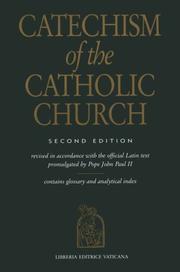
The Church’s systematic exposition of faith, sacraments, moral life and prayer. A reference to return to alongside other reading.